
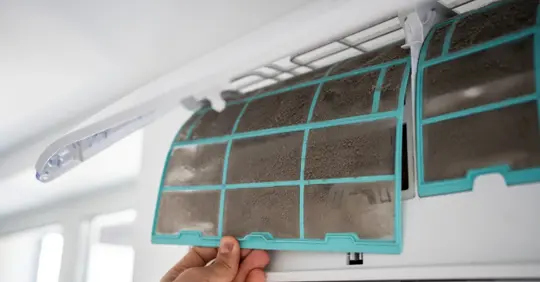
In New Orleans, air conditioners don’t get much of a break. After months of steady cooling through heavy heat and humidity, your HVAC system has been working hard every day. One of the simplest, yet most overlooked, maintenance tasks after a long cooling season is changing your air filter.
A clean air filter helps your system breathe easier, cool more efficiently, and maintain better indoor air quality. When it’s ignored, your system can slowly lose performance without you noticing right away.
If your AC has been running all summer without a filter change, now is a good time to take action. You can schedule HVAC support through our form or call (504) 788-1474 to help keep your system running smoothly heading into the next season.
Why Air Filters Matter More Than Most People Think
Your air filter’s job is simple: it traps dust, dirt, pollen, and other particles before they enter your HVAC system. Over time, those particles build up and clog the filter.
When that happens, your system has to work harder to push air through your home.
A clean filter helps:
- Keep airflow strong and consistent
- Improve indoor air quality
- Reduce strain on HVAC components
- Support more efficient cooling
Even though it’s a small part, the filter plays a big role in overall system health.
What Happens After a Long Cooling Season
After months of continuous use, especially during peak summer, air filters are often much dirtier than homeowners expect.
Common results of a neglected filter include:
- Weak airflow from vents
- Rooms cooling unevenly
- Higher energy use without better comfort
- More dust is building up inside the home
In some cases, a clogged filter can even cause the system to freeze up or shut down temporarily because air can’t move properly through the system.
How Dirty Filters Affect Your HVAC System
When airflow is blocked, your HVAC system has to work harder to reach the temperature you set on your thermostat. That extra effort doesn’t just affect comfort—it affects system health over time.
Main stress points include:
- The blower motor is working harder than normal
- Coils are becoming too cold or too hot due to restricted airflow
- Increased wear on internal components
- Reduced overall system efficiency
Think of it like trying to breathe through a clogged mask—the system is still working, but not at full strength.
How Often Should You Change Air Filters?
There’s no single rule for every home, but general guidelines include:
- Every 1–2 months during heavy cooling seasons
- More often, if you have pets or allergies
- Monthly in high-dust or high-usage environments
- At a minimum, at the start and end of peak summer
If you’re unsure, checking the filter is quick and can tell you a lot just by looking. If it appears gray, dusty, or clogged, it’s likely time for a replacement.
Simple Signs Your Filter Needs Changing
You may need a new filter if you notice:
- Reduced airflow from vents
- A musty or dusty smell when the system runs
- Rising energy bills without changes in usage
- More dust is settling on surfaces around your home
These signs often appear gradually, which is why filter changes are easy to forget.
A Small Step That Supports Long-Term Comfort
Changing your air filter is one of the easiest ways to help your HVAC system recover after a long cooling season. It improves airflow, cleans indoor air, and reduces strain on your equipment.
If it’s been a while since your last check, it may also be a good time to schedule a seasonal HVAC inspection.
When to Reach Out for Support
If your system is still struggling after a filter change, there may be deeper airflow or maintenance issues involved. Professional inspection can help identify whether there are additional concerns affecting performance.
Calloway & Sons LLC helps homeowners and businesses across New Orleans keep HVAC systems running efficiently through every seasonal shift. You can schedule HVAC support through our form or call (504) 788-1474.